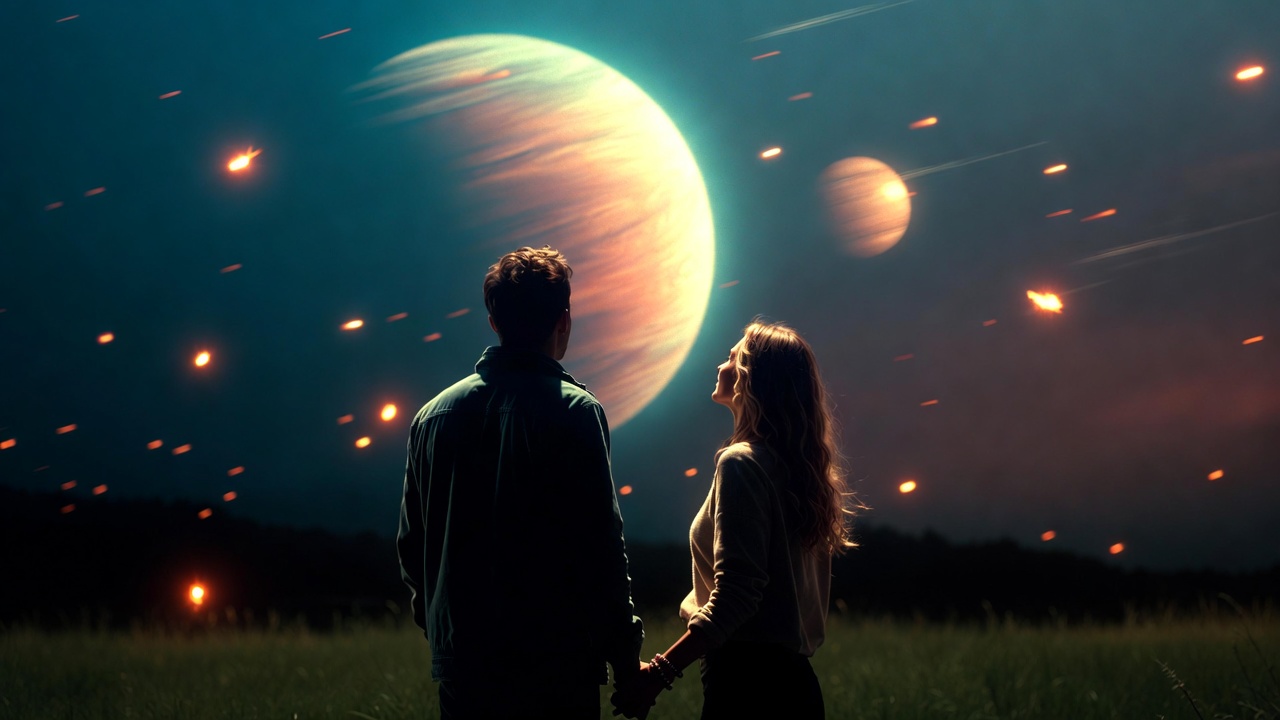
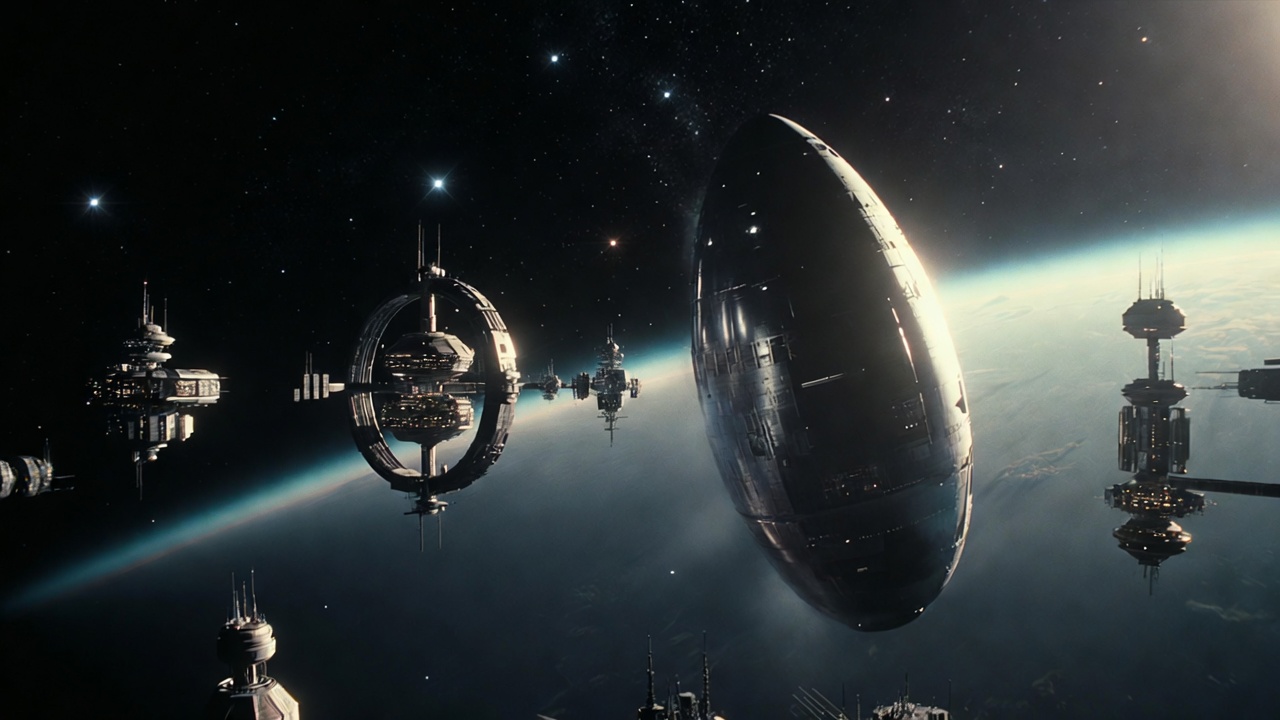
The Wanderer hung above the unnamed planet like a cautious thought.
The ship had existed for eight thousand years – built in the orbital shipyards above Europa, crewed by twelve humans who collectively had over 25,000 years of lived experience. The journey had taken 3,200 years. Subjectively, thanks to time dilation and long cryosleep periods, it felt like forty.
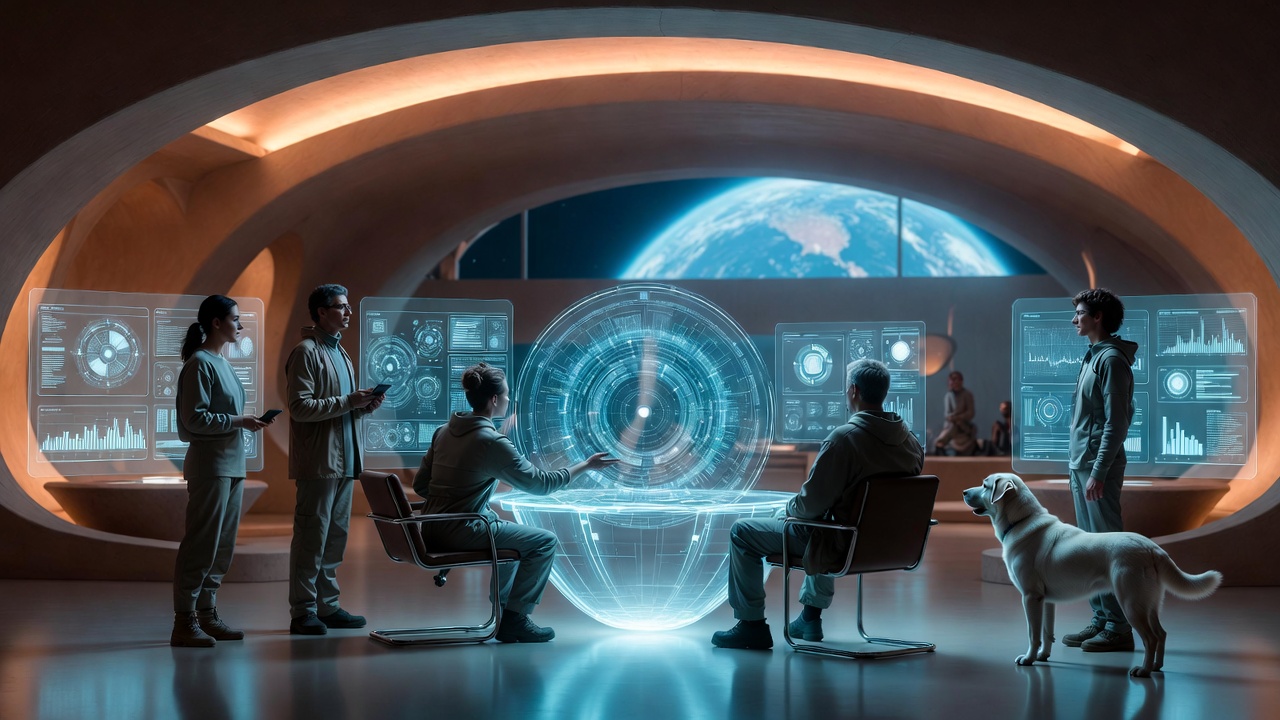
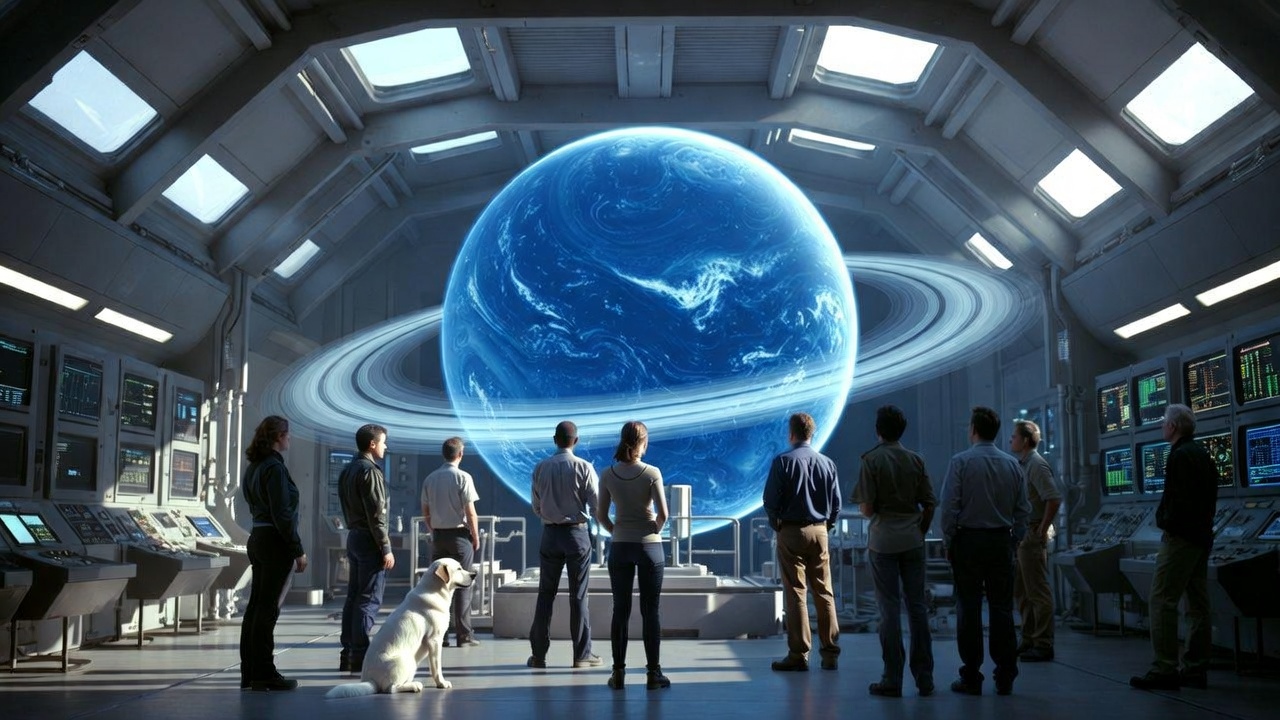
In the main chamber of the Wanderer, they all stood together now, staring at the world below.
"Beautiful," Yuki murmured.
"Blue," her twin brother Sven added.
"Very blue," confirmed Theo, the youngest of the group at a mere 340 years old. "Almost suspiciously blue. Like someone turned the saturation up too high."
Grandmother Zhen, the eldest at 4,800 years, smiled. "When I was young, people used to say: If something looks too good to be true, it's probably exactly right for an adventure."
"Or a trap," Karim interjected. He was 2,100 years old and had studied military strategy in his first life. Old habits die hard. With a lifespan of several millennia, they practically don't die at all.
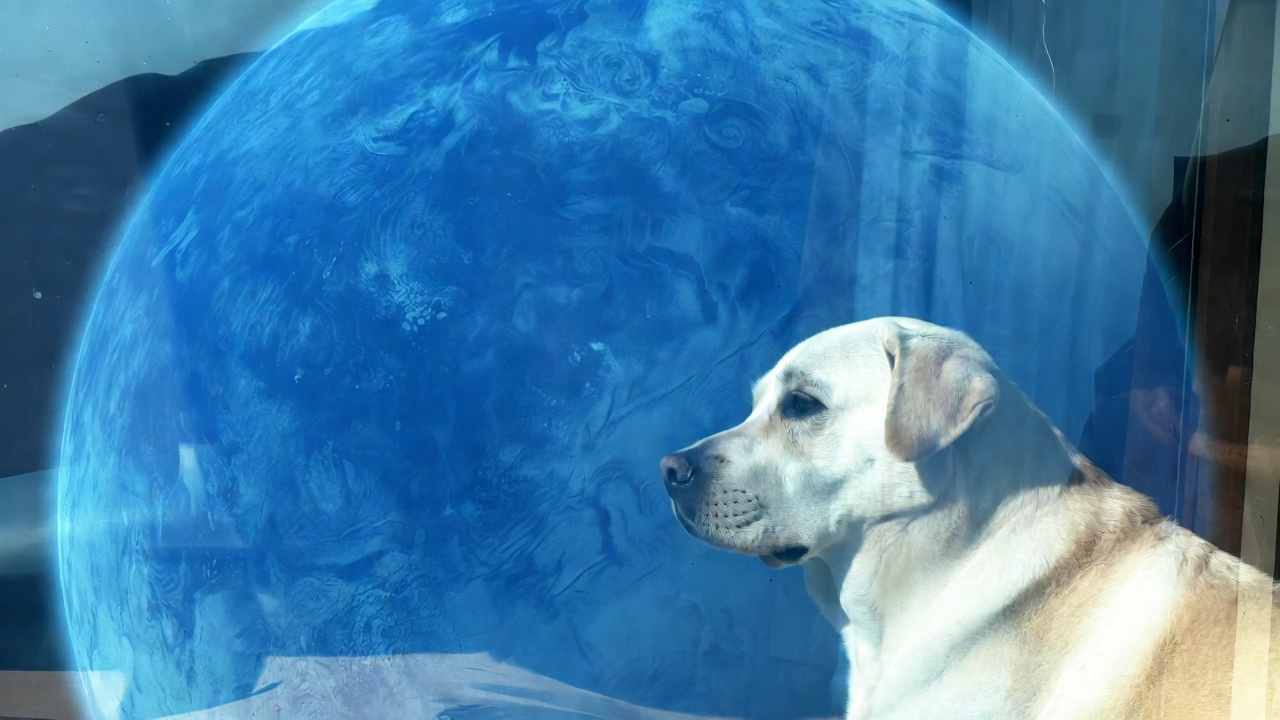
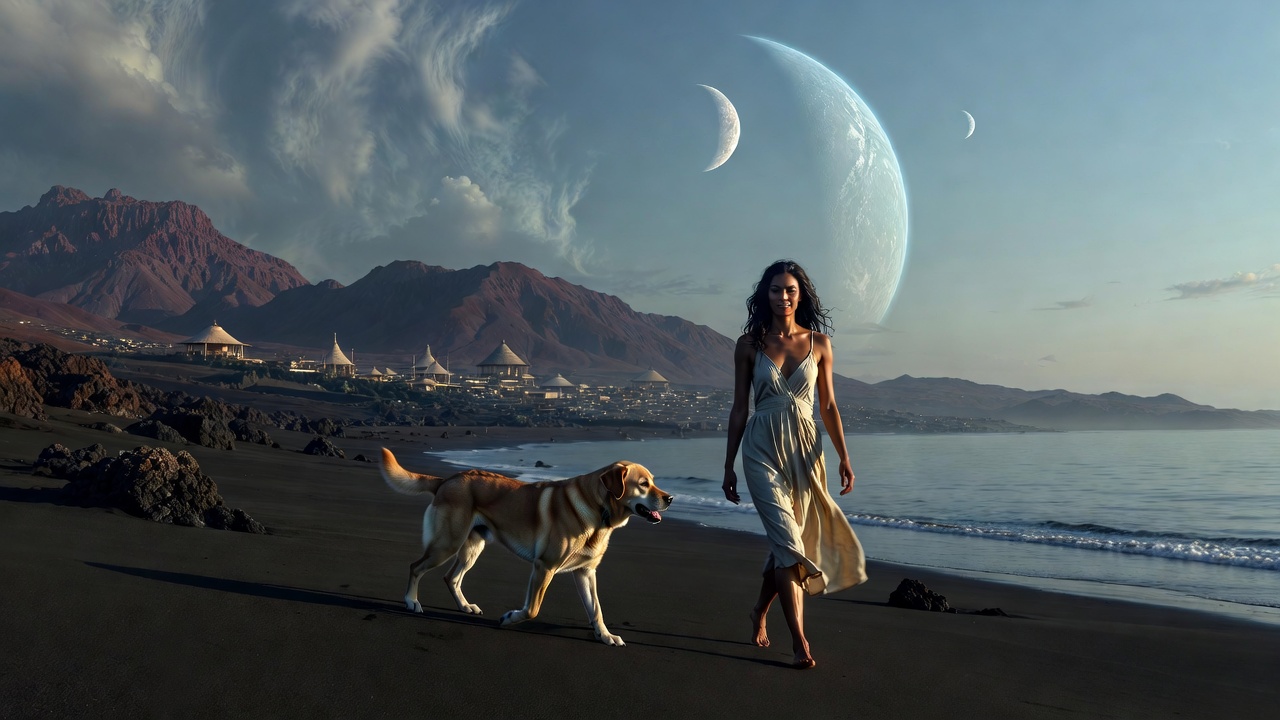
At Zhen's feet lay Longpaw.
The dog – a mix of ancient breeds that no longer existed on Earth – dozed on the metal floor. His muzzle was gray, but had been for 4,000 years. His eyes were cloudy, but alert. His lifespan had been genetically extended to approximately 5,000 years, a gift from the bioengineers who had planned the mission.
"The dog doesn't look impressed," remarked Amara, the 1,450-year-old systems engineer.
"Longpaw," Zhen said gently, without taking her eyes off the planet, "is impressed by nothing. That is his spiritual superiority."
The dog lifted his head, yawned extensively, and laid it back down.
"See?" Zhen smiled. "Enlightenment."
The scan results came in.
Theo read aloud: "Atmosphere: 21% oxygen, 78% nitrogen, trace gases within normal parameters. Gravity 0.97 G. Magnetic field present and stable. Water covers 71% of the surface. Landmasses organized into three continents."
"Life?" asked Yuki.
"Oh yes." Theo's eyes lit up. "Everywhere. Microorganisms, plants, complex multicellular organisms. Biodiversity at the level of Earth during the Cambrian. Maybe early Ordovician."
"Intelligent life?"
"Define intelligent."
Sven sighed. "Theo. Please. We've traveled 847 light-years. Is there anyone here we can talk to, or not?"
Theo zoomed the scans. "Depends on how good you are at sign language. There are primates. Six-limbed. Four legs, two additional grasping arms. Social structures. Tool use at a very primitive level – stones, sticks, that's it. Communication through sounds and gestures."
"Consciousness?" That was Karim, always searching for the military advantage. Or in this case: the philosophical point.
"Proto-conscious, I'd say. They might have a sense of self. Maybe not. Hard to say without direct contact."
Silence in the room.
Zhen finally broke it: "We are 8,000 years from home. Sol is a point of light in the night sky. No one there knows if we're still alive. No one here knows we exist." She turned to her family. "Why are we here?"
"Scientific exploration," Sven answered automatically.
"Resource search," Amara suggested.
"Boredom?" Theo grinned.
Zhen shook her head. "No. We're here because Sol has become too perfect. Too solved. Every question answered. Every problem solved. Humanity in the year 10,000 has no great challenges left. We live forever, we have infinite energy, we have peace."
"Sounds terrible," Karim muttered dryly.
"It is terrible," Zhen said seriously. "Not because it's bad. But because it has no meaning anymore. We came here to find something that isn't solved yet."
She looked back at the blue planet.
"Maybe we just found it."
Longpaw stood up, trotted to the window, and pressed his nose against the thick transparisteel.
Below, 400 kilometers away, a world turned.
The dog couldn't understand what he saw. Couldn't comprehend that this was a planet, a sphere of rock and water, populated by billions of life forms all fighting for existence.
For Longpaw it was simple: New smells ahead.
His tail wagged once.
Zhen placed her hand on his head. "You're right, old friend. Enough philosophy. Time for action."
She turned to the crew. "We land tomorrow. Preparation starts now. Theo, I want complete biological scans of the landing zone. Amara, get the habitat modules ready. Karim, security protocols."
"And me?" asked Yuki.
Zhen smiled. "You take care of Longpaw. He'll be the first to touch the ground."
"Why?"
"Because," Zhen said, "dogs have always been better than us at greeting new worlds. Without prejudice. Without fear. Only with curiosity."
Longpaw, who hadn't understood a word, wagged his tail again.
The next day, the landing craft floated through the atmosphere.
The planet smelled of salt and chlorophyll and something Theo called "prehistoric authenticity," which no one understood, but everyone nodded anyway.
The ramp opened.
Longpaw, leashed to Yuki's hand, stepped out first.
His paws touched alien soil for the first time.
He sniffed.
Lifted a leg.
Marked a stone.
"And thus," Zhen said solemnly, "we officially claim this planet in the name of... a dog who had to pee."
The crew laughed.
Longpaw, unimpressed by the historical significance of his moment, trotted on, nose to the ground.
Behind him: twelve humans who didn't know they were about to spend the next 5,000 years of their lives here.
Ahead of him: a world full of possibilities.
And somewhere in the forest, still invisible: beings who would one day stand upright. Speak. Ask questions.
But that was still centuries away.
For now it was just: A dog. A family. A planet.
And a question no one spoke aloud yet:
What will we do here?